Pages

Showing posts with label TiriTiri Matangi Island. Show all posts

Monday, 30 November 2015

Extension Reflection

Extension Reflection 

Highlight of Extension for 2015:
1. The fact that I could make new friends through Extension. 
2. I could collaborate with others. 
3. All the fun trips to Tiritiri Matangi Island, Malama Honua visit at the Maritime museum, Google for Education summit in Hobsonville. 
4. The chance to extend my learning. 
5. The 20hr Famine that the extension took part in. 
6. All the google hangouts we did with Hawaii and South Africa + the Malama Honua Crew. 

Lowlights of Extension for 2015:
1. I didn't complete my tasks as well as I could have. 
2. We had to come to Extension on Monday which means that we had less time for our class Literacy. 

Apart from the lowlights, Extension 2015 was so amazing. I loved it. Huge Thankyou to Mrs Lagitupu for being an amazing extension teacher. 


Monday, 15 June 2015

Tiritiri Matangi Reflection

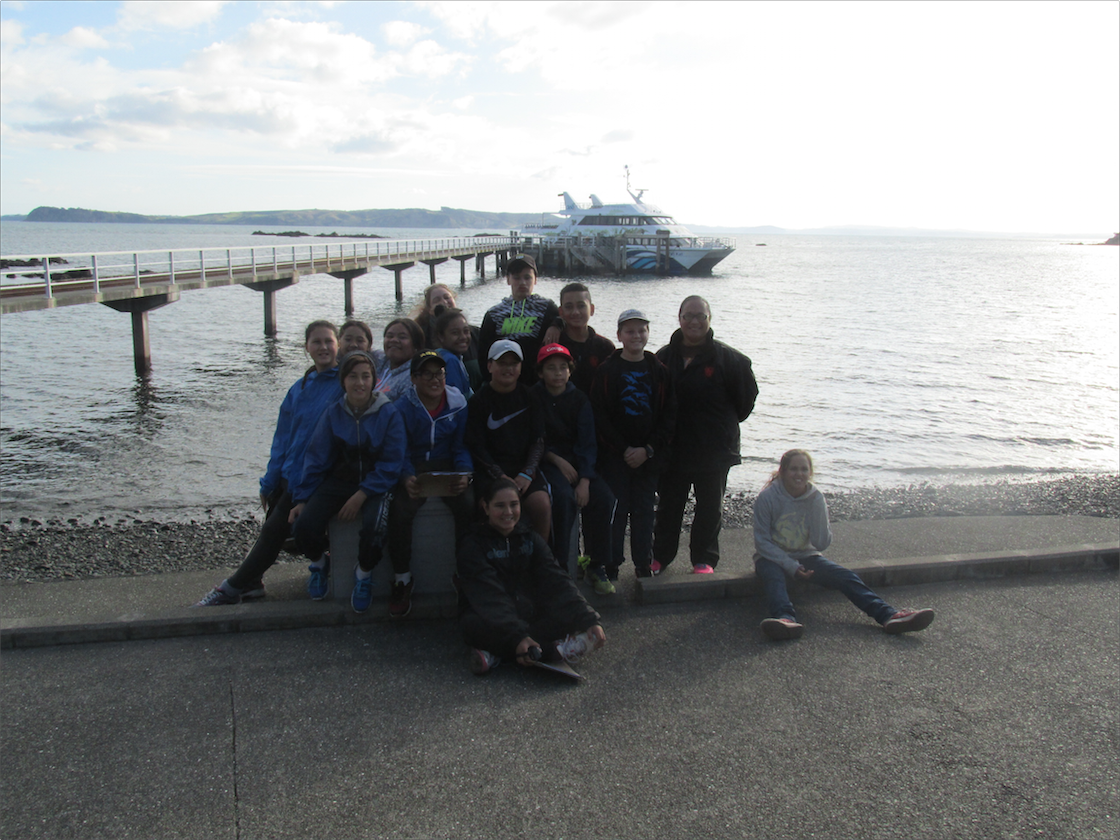
7:30am in the morning, freezing cold, and at school. What a great way to start the day! I went into the Creative Space room to find all the year 7 girls writing names on water bottles.  Ariana gave me one and I put it in my bag.  Once everybody had gathered into the Creative Space room, Mrs Lagitupu introduced a lady from D.O.C. ( Department Of Conservation ) and the two parent helpers that we were fortunate enough to have.

The lady that was from D.O.C. was Vanessa Whiu. The helpers were Mrs Samuels (Jordan’s Mum) and Mrs Hotu (Zane’s Mum). We talked about what will happen and when the shuttles will come to take us to the ferry terminal in Central Auckland. We had to wait for the shuttles which were coming at 8:00.

The clock hit 8:00 and the shuttles were here. We loaded into the shuttles and we headed for the ferry terminal so that we could board the ferry at 9:00. Once we hit the road we were off as fast a lion in hunting season. We had arrived at the ferry terminal and met some people from D.O.C. who were waiting for us.

We all hopped off the two shuttle buses and waited for Rebecca who was another lady from D.O.C. Rebecca came and we sang a himene which was all about love because when we are on the Island we need to be thoughtful and caring for not only the birds and creatures around us but our friends and other visitors that are on the island.  

Next we went to the boarding area and made sure that our shoes were clean because it you have seeds or soil and you take it on to Tiritiri Matangi Island it could ruin the ground and environment. Once we all checked that our shoes were clean we could board the ferry. We sat down and waited until we took off.

On the ferry I sat with Ariana, Khaia, Lucy and Lesieli. To pass the time we played games like Scattergories and the sentence game. The captain talked over the intercom to say that we will be stopping to pick up some people on Whangaparaoa. We stopped in Whangaparaoa and pick up the people and then we started making our way to Tiritiri Matangi Island.

When we arrived at Tiritiri Matangi Island we hopped onto the dock where a trailer was waiting. We walked down the path and saw a truck with another trailer on the back which was going to take our bags so that when we go on a tour we won’t have to carry our bags. I put my bag in the trailer and went in front of the Island ranger and sat down.

The ranger  talked about what the island was like 25 years ago and how special it was to them. We then split into our groups and was told that a lady named Glennys will take us on our tour of the island. We started by looking at the map of Tiritiri and talked about the history of the island. We then went on a track which was called the Wattle track. While walking up we saw a bird called a fantail. The fantail was near a pond which looked very old and dirty. As we moved on we noticed that the fantail was following us.

We then stopped to look at a tree called the Puriri Tree. We learnt that the Vitex Lucens can grow upto 20m high and the branches produce bright shiny green leaves and fruit. We continued and then we heard a Tui calling. We then saw the Tui eating the fruit of the tree. We noticed that the Tui had two white patches underneath its chin.

We had walked all the way through the Wattle track and then met at the main area by the souvenir shop. We looked at the lighthouse and went into the watchtower.

Things that I learnt on Tiritiri Matangi Island.

  • That there are female and male trees
  • That the Bellbird drinks sugar and water together so that it can restore its energy.
  • Tui are bossy and like to take everything.
  • The lighthouse has been on the island for over 60 years and is now the oldest working lighthouse in New Zealand.
  • The lighthouse used to have lighthouse keepers until solar panels were installed to make it an automatic.


Image result for tiritiri islandTiritiri is an amazing island and I really want to go again. When I grow up I want to help on the Island.


Tuesday, 9 June 2015

Tiritiri Matangi Island

Tiritiri Matangi Island

Tiritiri Matangi Island also known as Tiri is a wildlife sanctuary managed by company named D.o.c. (Department Of Conservation). Tiri is located 30 km North East of Central Auckland and just 4 km from Whangaparaoa Peninsula.  A hundred and twenty years of farming had seen this 220-hectare island stripped of 94% of its native bush but between 1984 and 1994, volunteers planted between 250,000 and 300,000 trees. The Island is now 60% forested with the remaining 40% left as grassland for species preferring open habitat.

Tiri is a home to many endangered species such as the flightless Takahe, bellbird and the little spotted Kiwi. Tiri is mainly known for its birdlife it also has reptiles such as the tuatara and the Moko Skink. The Takahe is a very special bird. The island also has many different types of plants and native bushes. Some native bushes are the Makaka, Rewarewa and Annual Hibiscus.   

In the past the island had a couple of pests like the Kiore (Polynesian Rat) and the Argentine Ant. They had no choice but to get rid of them due to them eating the bird's eggs and taking over. The Kiore was known to be a threat for New Zealand's native birds. At one point there was 200 Kiore in the grass per hectare. When it was realised that kiore were having a major effect on the environment and with advances in technology eradication became possible. People checked the amount of bird losses and realised that there was way to many. This is was because of the pest Kiore.  A drop of an anticoagulant brodifacoum ( poison ) from a helicopter was carried out in 1993. Ninety percent of pukeko were killed after the poison drop and some ground feeding birds brown quail, blackbirds, sparrows and mynas were also killed. The Kiore that was hiding in the grass also got killed due to the poison.  

The other pest that has been eradicated from Tiritiri Matangi Island was the Argentine Ant. The vigilance of a DOC entomologist lead to the discovery of Argentine ants near the wharf in 2000. These ants arrived here from the wharf building material and the whole swarm was moved, not just one or two ants. They are one of the world’s most invasive species overtaking our native ants and so a 5 year eradication programme was set up. They eat a wide variety of foods, have been reported to attack nesting birds and kill nestlings, and invade native ecosystems and displace native ant species. They can also produce multiple queens and can form huge super-colonies that extend for thousands of kilometres. Luckily the ants were only discovered at two locations near the wharf and at Northwest Bay. The eradication involved hand laying bait at 2-3 m intervals on a grid.  This involved the help of many volunteers and favourable weather. By 2004 only two nests remained and these were spot treated to ensure their total eradication. This is the first time a total eradication of ants has been achieved in such a large area of New Zealand.

Tiritiri Matangi Island is a very special and safe place and I can’t wait to get the opportunity to see a flightless Takahe up close.