This morning we had a special seminar with three speakers that came to inspire us for our future. The three speakers were Amelia Unufe , Anthony Samuels and Paula Fakalata. Our host for the seminar was Mr Andrew Patterson.
The first speaker was Anthony Samuels. His speech was 1 phrase 1 key. The phrase was " To miharo Hoki" and the key to the phrase was "your past does not have to determine your future". Mr Samuels was a former actor on What now back in 1981. He had moved up to the producer of What now for three years.
The next speaker was Paula Fakalata. He is a attitude presenter who has spoken to about 4000 students this year. All he wanted to do was help people who needed help. His speech was about taking good risks.
The last speaker was Amelia Unufe. At year 4 she had heard about the I have a dream programme and decided to take a look. In the end she decided too be a fashion designer because that is what she wanted to be.
Wednesday, 26 November 2014

Monday, 24 November 2014
Manaiakalani Film Festival
Manaiakalani Film Festival
 The Manaiakalani cluster is made out of 12 schools who have the vision to lead future focussed learning in our communities. The word Manaiakalani is a Hawaiian word for “ The hook from heaven”.Each year Manaiakalani holds a Film festival containing movies that are made by the Manaiakalani schools. With each movie from the schools they have either one or two presenters. The presenter write a script to say. Our class presenters were MuaMua Leuila and Henry Neemia. Pt England School has been apart of the Manaiakalani cluster since it the company started. Pt England school had the privilege of going to the Manaiakalani Film Festival.

Hopping on the S kids bus desired desired to get one of the best seats in the bus. Sitting at the back talking with Allanah and Shanika excitedly saying “ I wonder which movie will be the best movie?”. Frolicking of the bus like a gazelle racing to the line eager to get in the cinemas. “Finally we’re in the cinemas. That was such a long ride”I exaggerated to Allanah. Mrs Lagitipu showed us where to sit because we were in the cinemas with Sommerville Special School. Finally being seated looking next to me seeing who was sitting next to me. Whew it was Allanah. 20 minutes later the first movie had started. What luck the first movie was our class’ movie. It was called The Kindness Boomerang. Our presenters MuaMua and Henry read their script and then the movie played. Reluctantly getting out of my seat, slouching towards the cramped up exit way. Gathering up all the thoughts in my head about all the movies that were screened that afternoon thinking about which one were my favourite. For me my Top 3 were The Wizard Of Ozland , Me Tv and The Bowl Cut. I really like The Wizard Of Ozland because the way that the filmer shot the angles. Me Tv was cool because it had heaps of different genres such as horror, cartoon and music and dance. Lastly The Bowl Cut was funny because the way that Ana and Aneelis said the steps. At the end of the day I felt so eager for the next Manaiakalani Film Festival. This year we had one of the best ones. I wonder what it will be like for next year?
Wednesday, 19 November 2014

Monday, 17 November 2014
Triangle Addition


Thursday, 23 October 2014
Paige Kowhaiwhai Auckland Museum 12+
What is Kowhaiwhai?
Kowhaiwhai are beautiful painted design patterns. At first, kowhaiwhai patterns can be viewed as decoration only, but closer examination shows that they involve sophisticated mathematical precision. These patterns include symmetry, rotation, reflection and translation.
The koru or pitau is the most basic design element of kowhaiwhai. These are curving stalks with bulbs at one end. They bear a striking resemblance to the young shoot of a native fern.
After the koru or pitau, the next main motif or pattern of kowhaiwhai is the crescent or kape. This is characterised by a line of evenly placed white circles on the outer edge of the crescent.
The koru or pitau and the kape, are all that make up the list of basic kowhaiwhai motifs. However when used in various combinations these two patterns can create many varying designs of incredible depth.
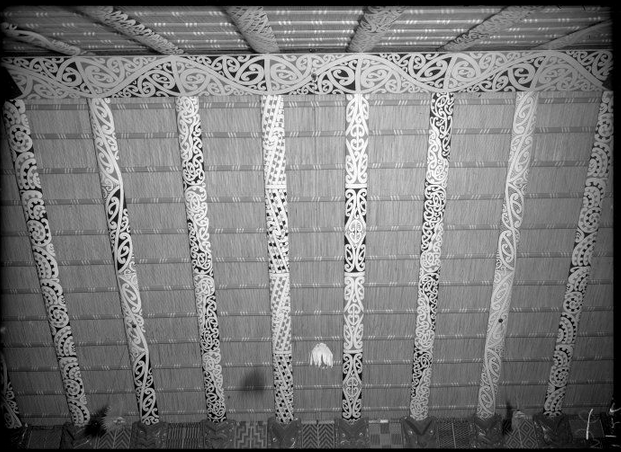
1. Why does it say that kowhaiwhai are more than just decoration?
Closer examination shows that they involve sophisticated mathematical precision.
2. Describe the two main patterns of kowhaiwhai?
The two main patterns are the kapae and the crescent.
An Artform
Stories that explain the origin of kowhaiwhai all say that it is an art form secondary in importance to wood carving (whakairo) and tattooing (ta moko). When kowhaiwhai is compared to wood-carving and tattooing, there are several contrasts. Apart from the obvious differences of how they are created, kowhaiwhai is seen as something more temporary. It is not seen as having lasting value, so requires no special ritual and no formal training. It is considered to be a common (noa) activity and so therefore, can be carried out by anyone.
The colours red, black and white are often the only colours that appear in kowhaiwhai patterns. Red was obtained by mixing red ochre with shark-liver oil. Black paint was made by mixing shark oil with powdered charcoal. For white paint, taioma or pipeclay was burned then pulverised and mixed with oil.

3. Why is kowhaiwhai seen as less important than whakairo and ta moko?
Kowhaiwhai is very common. It requires no special ritual or formal training because it is not as important than Whakairo and Ta Moko
4. Do you think whakairo and ta moko was carried out by anyone?
No because they need formal training to make or do the whakairo and ta moko
Origins
One oral account from Ngati Kahungunu, traces the origin of both wood-carving and kowhaiwhai. It tells us that:
When Whiro, Haepuru and Haematua climbed up to the second heaven to obtain carvings for their house, they were told by one of the gods that the art of decorating houses with wood carvings had already been taken away by their younger brothers. Whiro and his two friends complained to the god that they could not go begging to their younger brothers for the art, so the god showed them how to embellish a house with painted designs.
Whiro and the others then descended and adorned their own house with painted designs.( Best (1982:287-8…)
5. Why couldn't Whiro, Haepuru and Haemata get carvings for their house?
Their younger brothers had already carried it out.
Look at these words in the article and see if you can work out their meaning from the context. Then look up and write down the definition from the dictionary
Sophisticated : Having revealing or involving a great deal or worldly experience and knowledge of fashion and culture.
Precision: The quality, condition, or fact of being exact and accurate.
Resemblance : The state of resembling or being alike.
Motif : A decorative image or design, especially a repeated one forming a pattern
Secondary : Coming after, less important than or resulting from someone or something else that is primary.
Temporary : Lasting for only a limited period of time not permanent.
Pulverised : Reduced to fine particles.
Obtained : Gain something
Embellished : Make something more attractive by the addition of decorative details or features.
Adorn : Make better/ attractive.
Wednesday, 22 October 2014
Subscribe to:
Posts (Atom)